

Migration and OT security at a Belgian textile manufacturer
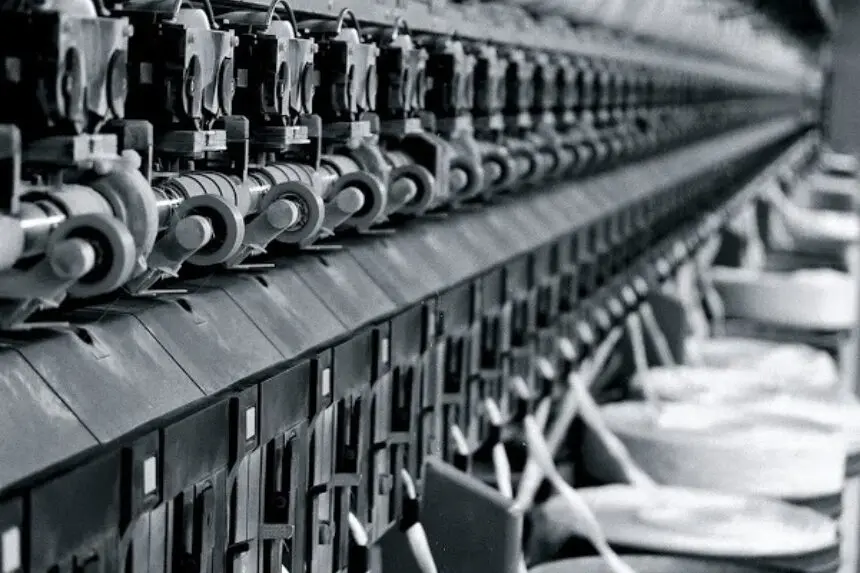
An outdated S5 environment without OT segmentation made a risk-free migration to a future-proof architecture necessary.
A leading Belgian textile manufacturer faced a classic yet critical problem: an outdated automation environment running on Siemens S5 technology. This infrastructure was not only technically obsolete but also posed an increasing risk to production continuity. Spare parts became scarce, knowledge disappeared from the market, and the likelihood of unplanned downtimes increased.
At the same time, there was a lack of a structured OT-security approach. The network had grown historically and was insufficiently segmented, making the production environment vulnerable to external and internal threats.
The challenge was therefore twofold: to carry out a technological migration without production impact, and at the same time to take a first step towards a secure and future-oriented OT architecture.
Solution: technological modernization
Migration of outdated technology
The existing installation was modernized by replacing five Siemens S5 CPUs with one central Siemens S7-1500, which increased both performance and reliability while reducing complexity.
Additionally, an ET200SP remote IO architecture was implemented and the software was redeveloped while maintaining all functionalities, resulting in minimal impact on production and operators.
Modernization of visualization & control
Alongside the PLC migration, the operator interface was also updated. The installation was equipped with a new 22” HMI based on WinCC Unified, which provided a more intuitive and high-performance operation.
The new visualization layer enables better monitoring of processes, faster diagnosis, and more efficient intervention in case of deviations. This directly translates into higher operational efficiency on the shop floor.
Integration of OT
security
In addition to the technological upgrade, efforts were also made to enhance cybersecurity. By implementing network segmentation using Ixon, the OT environment was divided into logical zones.
This approach provides better control over data flows and limits the impact of potential incidents. At the same time, a foundation was laid for secure remote access and further development of a mature OT security strategy.
Approach: from engineering to delivery
Analysis & design phase
The project started with a thorough analysis of the existing installation and software. Based on this, a functional design was created that served as a guideline for further engineering. The electrical schematics were also revised and aligned with the new architecture.
This preparatory phase was crucial for mitigating risks and enabling a controlled migration.
Implementation & testing
The effective conversion included the installation of the new hardware, the integration of the software, and the execution of extensive testing. Through a structured approach with Factory Acceptance Tests and Site Acceptance Tests, the operation of the system was validated before and during the startup.
This approach ensured a smooth transition to the new environment without unexpected issues.
Commissioning & aftercare
After the successful startup, the system was released for production. Centif provided additional support during the first operational phase, both onsite and remotely, to quickly implement any optimizations.
This ensured a stable transition and maximum reliability of the installation from day one.
From legacy to future-proof production environment
Through the combination of a well-thought-out migration strategy, modern technology, and an initial step in OT security, an outdated and risky installation was successfully transformed into a future-proof production environment. Where dependence on obsolete systems and limited flexibility once dictated operations, the customer now has a stable and high-performing automation foundation.
The new architecture not only offers greater reliability and ease of maintenance but also creates the necessary flexibility to respond to future expansions and process optimizations. At the same time, the introduction of network segmentation provides better control over the OT environment and a clear first step towards a mature cybersecurity strategy.
This realization goes beyond a classic migration: it forms a strategic foundation upon which further digitalization, integration with higher systems, and scaling can be developed in a controlled manner.