

High-impact PLC migration in a highly regulated pharmaceutical environment
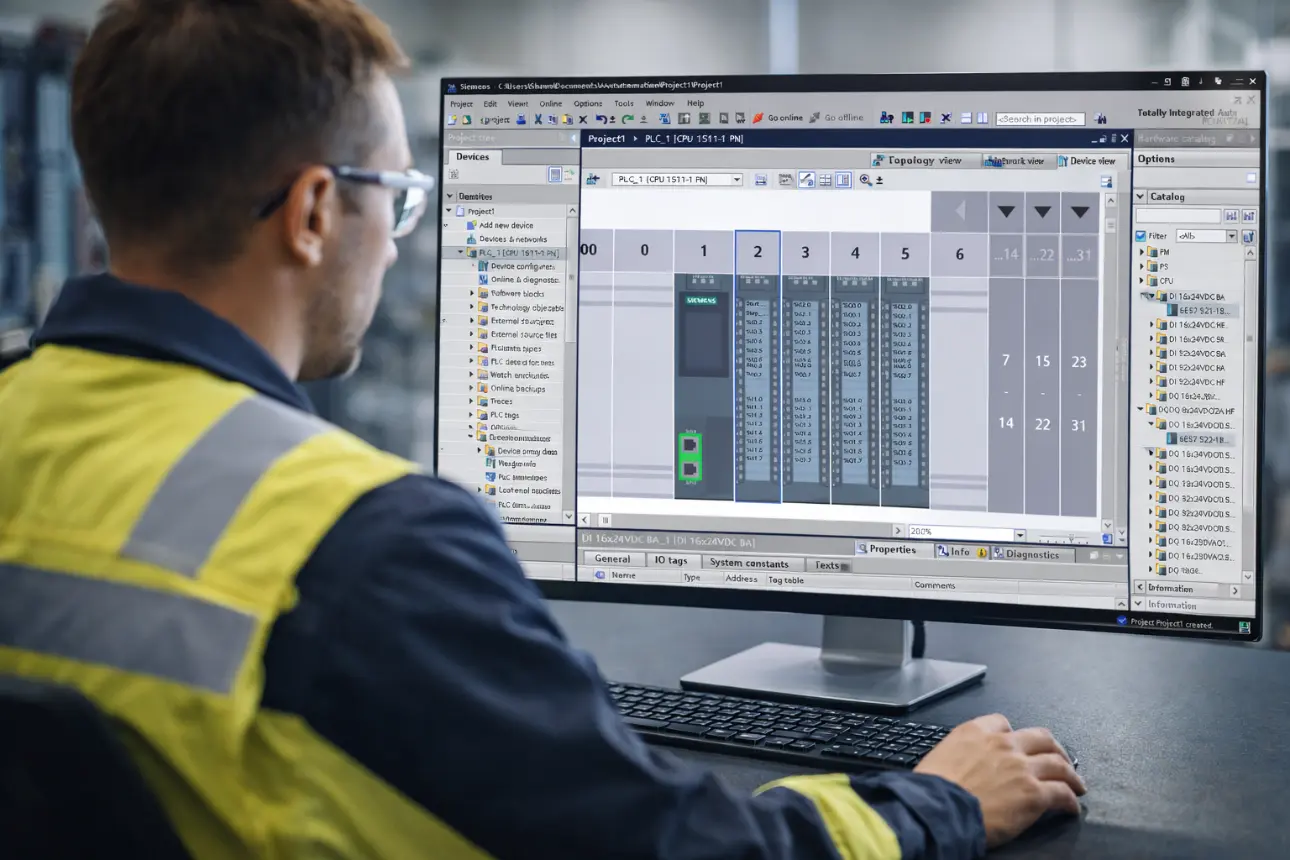
Centif rebuilt the software from scratch: a GAMP-compliant S7 architecture that accelerates validation and makes maintenance future-proof.
Thorough hardware modernization
The modernization of the hardware infrastructure was a crucial step in making the installation future-proof, reliable, and easy to maintain again. By systematically replacing outdated components and thoroughly reworking the electrical foundation, not only was operational continuity strengthened, but flexibility was also created to efficiently implement future expansions and optimizations.
Migration from Siemens S5 to S7 architecture
The outdated S5 installation has been completely phased out and replaced with a high-performance and future-proof S7 architecture. This increases the reliability, availability, and integration capabilities of the installation, and eliminates risks associated with obsolete hardware and limited support.
Optimization of electrical infrastructure
The electrical cabinets were technically reviewed and adjusted as necessary to comply with the applicable site standards. Existing wiring was restructured and expanded with additional I/O capacity and extra measurement points for temperature and humidity, significantly improving process control and diagnostic capabilities.
Update of electrical schematics
All diagrams have been fully updated so that the documentation matches the actual field situation one-to-one. This creates transparency for maintenance and troubleshooting, and forms a robust foundation for future expansions or optimizations.
Key success factors in this project
New software as a foundation for stability
There was also a choice for a sustainable approach in terms of software. Instead of converting the existing S5 code, Centif developed a completely new S7 application according to the customer's standards and libraries, with CFC structures for HVAC and a direct connection to the IMS system.
Alarms, parameters, and I/O structures were rebuilt, and GxP-critical functions were strictly separated, simplifying validation and maintenance. Thanks to thorough version control, code reviews and compliance with GAMP guidelines, a robust and compliant software foundation was achieved.
Documentation as an integral part of compliance
In a pharmaceutical environment, documentation is not an afterthought but an essential part of the project. Centif delivered a complete and audit-ready file with hardware and software concepts, commissioning plans, test scenarios and test reports. Interlock overviews and input for operational procedures were also part of the delivery file.
In addition, the necessary declarations of conformity, CE-related documents and electrical inspection reports were provided. Thus, not only was the installation technically renewed, but compliance was also structurally anchored.
A future-proof and validated installation
Today, the customer has a modern, reliable, and fully validated PLC platform that meets the strictest requirements of the pharmaceutical sector. Thanks to the phased and controlled approach, the impact on operational functioning was limited, while the technical foundation of the building was thoroughly strengthened.
This migration meant much more than a technological update. It laid the foundations for long-term continuity, simplified maintenance, and further digitization initiatives within a highly regulated production environment.
Future-proof and compliant automation foundation
Together, the hardware and software modernization form an integrated upgrade that makes the installation structurally future-proof, robust and compliant. By replacing outdated technology while simultaneously implementing a transparent, standardized architecture, not only was operational reliability increased, but long-term manageability was also significantly improved.
This approach reduces risks related to disruptions, validation, and maintenance, while simultaneously creating the flexibility to implement future process adjustments, expansions or digitalization initiatives in a controlled and efficient manner. The result is a high-performance and sustainable automation foundation that supports both the current production continuity and the strategic growth ambitions of the site.